Dancing Skeletons Christmas: A Designer’s Review
When I first pulled up the Dancing Skeletons Christmas file on my screen, I expected the usual holiday clichés. We see enough snowflakes and reindeer to last a lifetime in this industry. But this design stopped me in my tracks. It is playful, slightly irreverent, and undeniably festive in a way that feels modern rather than traditional. As an experienced embroidery product reviewer, I look for designs that do more than just fill space; I look for personality. This machine embroidery design delivers exactly that, offering a unique twist on winter holiday themes that can elevate a standard project into something memorable.
First Impressions and Visual Personality
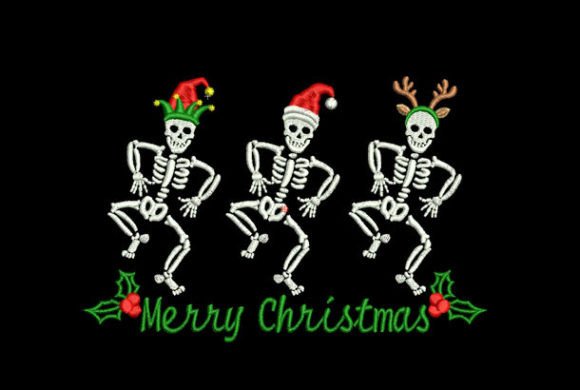
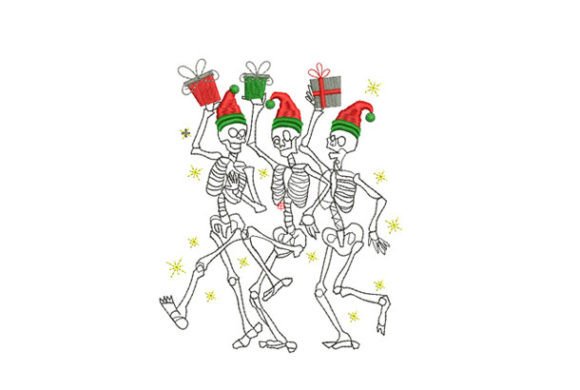
The immediate mood of Dancing Skeletons Christmas is joyful and energetic. The layout suggests movement, with skeletal figures caught mid-dance, likely adorned with holiday accessories like Santa hats or scarves. From a design perspective, the balance between negative space and stitch coverage is crucial. Skeletons, by nature, are linear and open. If the digitizer relies too heavily on thin running stitch lines without proper anchoring, the design can look fragile on fabric. However, a well-executed version of this theme uses clever fill stitch techniques to give weight to the bones while maintaining the whimsical, airy feel of the characters.
What stands out is the visual storytelling. It is not just a static image; it implies action. For crafters and Etsy sellers, this narrative quality is gold. It invites the viewer to smile, which increases engagement on social media previews and printable mockups. The design feels at home in the Christmas category but appeals to a broader audience who might find traditional motifs too saccharine.
Real-World Application: The Custom Sweatshirt Test
To truly evaluate an embroidery file, you have to imagine it stitched out. I recently considered this design for a custom apparel order—a set of matching family sweatshirts for a client who wanted something "fun but not cheesy." Dancing Skeletons Christmas was the perfect candidate. On a medium-weight cotton blend fleece, the design would sit prominently on the chest or as a larger back piece.
For sweatshirt embroidery, stitch density is a major concern. You do not want a dense block of thread that makes the garment stiff or causes puckering. This design, if digitized correctly, should utilize a mix of satin stitch for outlines and lighter fill stitches for any solid elements like hats or props. The open nature of the skeleton structure actually works in your favor here, allowing the fabric texture to show through and keeping the finished product soft and wearable.
Beyond apparel, think about tote bag design. A canvas tote featuring these dancing figures would make an excellent reusable gift bag or a standout item for a craft fair. The contrast of white or light-colored thread against a natural or dark canvas creates a striking visual that draws attention from across the room.
Navigating Fabric and Hoop Constraints
While the design is versatile, it requires careful handling depending on your substrate. Here is where practical experience matters. If you are planning to use Dancing Skeletons Christmas on textured fabrics like terry cloth towels or thick wool blankets, you must ensure the details are large enough to remain clear. Tiny details can get lost in the pile of a towel.
Conversely, on thin or stretchy fabric, such as baby clothes or lightweight t-shirts, stabilizer choice is non-negotiable. A cut-away stabilizer is often safer for garments that will be washed frequently, ensuring the design does not distort over time. For baby embroidery, always check the stitch count and density to ensure it remains gentle against sensitive skin. You might need to scale the design down, but be cautious: shrinking it too much can cause thread breaks if the original digitizing was optimized for a larger hoop size.
Curved surfaces like caps present another challenge. Placing a wide, horizontal design like dancing figures on a structured cap requires precise centering. If the design is too wide for your available hoop size, you may need to split it or choose a different placement, such as the side panel. Always confirm hoop size compatibility before purchasing or starting your project.
Commercial Viability and Brand Consistency
For small shop owners and digital product sellers, the commercial potential of this design is significant. It fits neatly into the niche of alternative or humorous holiday decor. This allows you to differentiate your brand from the sea of generic Christmas items. When creating design assets for your online store, use high-contrast thread colors in your mockups. Black thread on white fabric, or vibrant reds and greens on dark navy, can highlight the intricacy of the stitching.
Customer trust is built on consistency and quality. If you sell this as part of a personalized gift line, ensure that the finished product looks professional. Inspect the stitch-out for any jumps or loose threads. A clean, crisp embroidery job reflects well on your craft business. Furthermore, because this is a digital embroidery file, you must verify the license terms. Most designers allow you to sell finished physical products, but reselling the digital file itself is typically prohibited. Always read the specific usage rights provided with the download.
Technical Notes for the Serious Stitcher
Before committing to a final production run, follow these practical steps:
- Test on Scrap Fabric: Never stitch directly onto your final garment. Use a similar fabric scrap to check tension and registration.
- Check Thread Contrast: Since skeletons are essentially lines, the contrast between your thread color and fabric color defines the visibility of the design. Test both light-on-dark and dark-on-light combinations.
- Review Stitch Density: Look at the color change sequence. If there are too many stops and starts, it may increase production time unnecessarily. A well-optimized embroidery project minimizes trims and jumps.
- Inspect Small Details: Zoom in on the preview. Are the fingers and facial features distinct? If they blur together in the simulation, they will likely blur in real life.
- Verify File Formats: The product description mentions multiple embroidery file formats. Ensure you have the correct format for your specific machine (e.g., PES, DST, JEF) to avoid conversion errors that can alter stitch paths.
Final Verdict
Dancing Skeletons Christmas is a strong contender for any designer looking to add flair to their holiday collection. It bridges the gap between spooky and sweet, making it suitable for a wide range of ages and styles. Whether you are creating an embroidered patch for a jacket, a festive apron for holiday baking, or a unique pillow cover for home decor, this design offers the flexibility and charm needed to stand out. Just remember to respect the technical limitations of your machine and fabric, and you will produce a finished product that delights customers and enhances your reputation as a skilled maker.